reworking Media QC for the Pace of Modern Content
a clearer, faster way for media teams to review, resolve and move content forward.
30%
reduction in media QC check times

industry
media and entertainment
type
cloud media qc platform
mandate
platform experience redesign
the platform
as content volumes grew and review became more distributed, the product needed to make a technically demanding process easier to manage across teams, workflows and devices.

the product brief
the work began with the realities of the job itself - how media professionals review content, surface issues, respond to feedback and keep work moving against unforgiving delivery schedules. From there, we reshaped the product architecture, interaction model and visual system around the way that work actually happens.


“the team went out of their way to really understand our business, our clients' use cases, and our challenges so as to help us deliver the best possible product.
during the project, we saw how competent the team was in the areas that mattered - user experience design, prototyping, and visual design. the project was on time and ensured our dev schedules were respected throughout. the quality of work we've received has also been top notch...very pleased with the end-result.”

Raphael Morozov
Chief Technology Officer, Eurofins DMS Los Angeles, CAthe friction
resillion needed to reduce the effort of moving through that complexity without stripping away the depth and control experienced users relied on. the experience also had to hold together across desktop and mobile as the platform continued to grow.
the design response
make the next action obvious
keep collaboration inside the work
give the product a system to grow on
make the next action obvious
keep collaboration inside the work
give the product a system to grow on
the outcome
the new experience made it easier to understand where work stood, identify what required attention, and act without repeatedly reinterpreting the interface. complex QC activity remained available to experienced users, but the route through it became considerably clearer.
the desktop experience accommodated the depth required for larger review workflows, while the mobile collaborator experience gave users a more practical way to review and respond away from the desk.
both experiences were tied together by a reusable design system. common components and interaction patterns reduced inconsistency for users and gave Resillion a stronger foundation for extending the product without redesigning familiar behaviors each time.
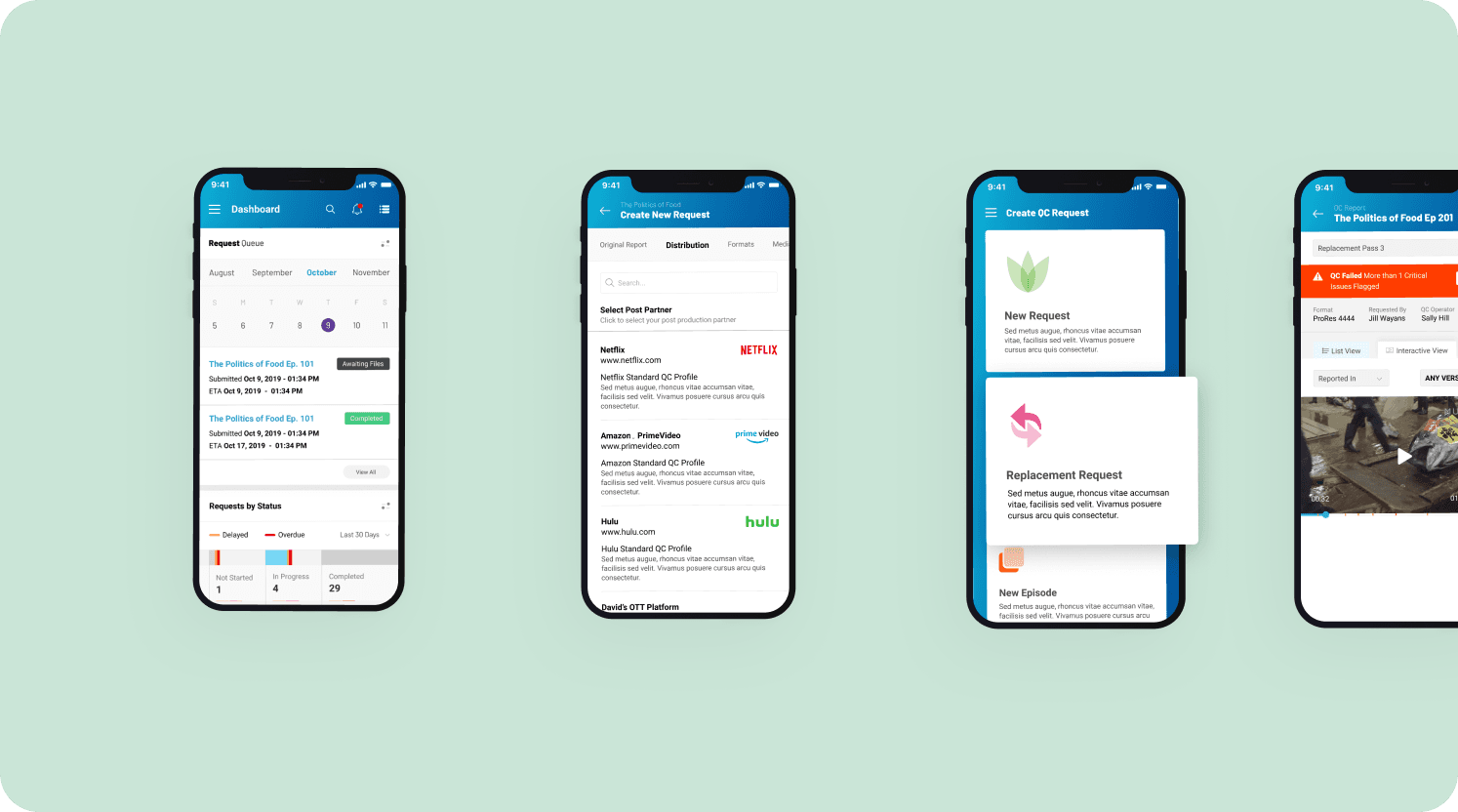
prototypes were tested and refined in short cycles, allowing important decisions to be resolved early and keeping the design program aligned with development schedules.
that work translated into measurable gains. media QC check times fell by 30%, collaboration efficiency improved by 40%, and content delivery turnaround became 25% faster.
more importantly, Resillion gained an experience framework designed to keep pace with the platform itself, as content volumes, workflows, and technical demands continued to evolve.