back to impact
reworking legal research around the way lawyers think
helping attorneys move from complex case law to relevant answers with less searching in between.
3x
faster time to find relevant case law
industry
legal technology
type
ai-powered legal research platform
mandate
research experience redesign
the platform
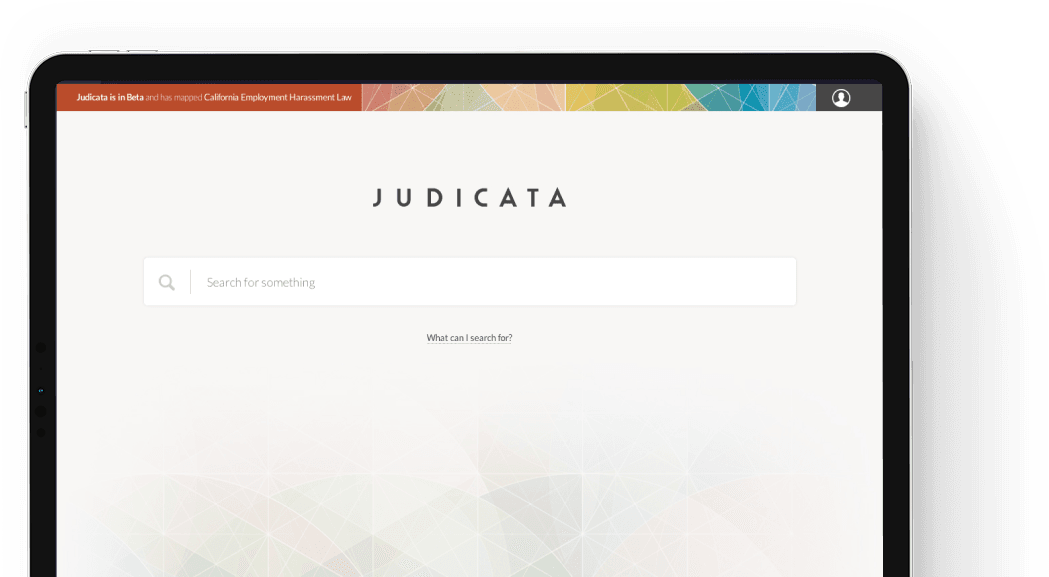
judicata set out to make legal research more useful to the people doing it.
rather than return long lists of cases and leave attorneys to work through them, the platform used structured legal data and search intelligence to help users find the cases, arguments and details most relevant to the question at hand.
the product brief
clarient worked with judicata as an extended product team across several versions of the platform.
our role covered research, information architecture, interface design, prototyping and product validation. the focus was clear. make advanced legal research easier to work with without taking away the depth and precision experienced attorneys expected.
our contributions
UX ResearchUX Strategy and UI DesignInformation ArchitectureInteractive PrototypingProduct Testing and ValidationAdvanced Search ExperienceCase Analysis ToolsWeb Platform Design


“i’ve been incredibly happy with the effort. the team made a significant and important contribution to our product, and we couldn’t have asked for anything more.”

Itai Gurari
Founder & CEOthe research burden
legal research is demanding because relevance rarely comes down to a keyword or a single document.
an attorney may need to consider the court, judge, cause of action, procedural posture and the reasoning within a case before deciding whether it deserves closer attention.
judicata needed to support that level of precision while keeping large amounts of information readable. the challenge was to give users more control over the research without giving them more interface to work through.
the design response
we worked closely with legal professionals and the Judicata team to understand how a research question develops in practice.
the experience was tested and refined across multiple product versions, allowing the team to improve how users searched, reviewed cases and worked with legal analysis.
start with the question
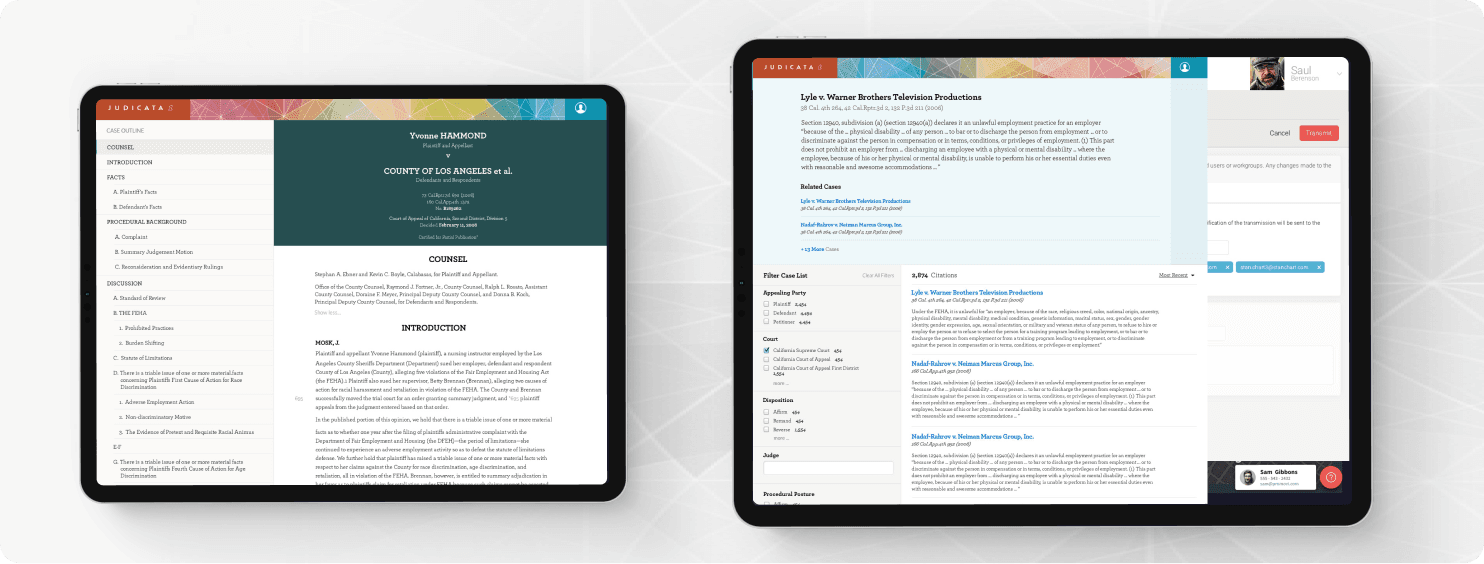
search was structured around the way attorneys narrow a legal issue.
filters, refinements and intelligent suggestions helped users move from a broad query towards the cases most likely to matter.
bring the useful parts forward
attorneys should not have to read an entire case simply to decide whether it is relevant.
navigable case outlines surfaced important sections and arguments earlier, making long decisions faster to assess.
carry the thinking into the brief
judicata’s Clerk tool extended the experience beyond research.
it analyzed legal briefs and surfaced useful findings that helped attorneys review their writing and strengthen how an argument was presented.
start with the question
search was structured around the way attorneys narrow a legal issue.
filters, refinements and intelligent suggestions helped users move from a broad query towards the cases most likely to matter.
bring the useful parts forward
attorneys should not have to read an entire case simply to decide whether it is relevant.
navigable case outlines surfaced important sections and arguments earlier, making long decisions faster to assess.
carry the thinking into the brief
judicata’s Clerk tool extended the experience beyond research.
it analyzed legal briefs and surfaced useful findings that helped attorneys review their writing and strengthen how an argument was presented.
the impact
judicata gave attorneys a more direct route from a legal question to the cases and arguments that mattered.
advanced search allowed users to narrow results using criteria such as court, judge, cause of action and procedural posture without turning the experience into a dense collection of controls.
structured case outlines made individual decisions easier to assess. attorneys could move quickly to the sections that mattered before deciding whether a case warranted deeper reading.
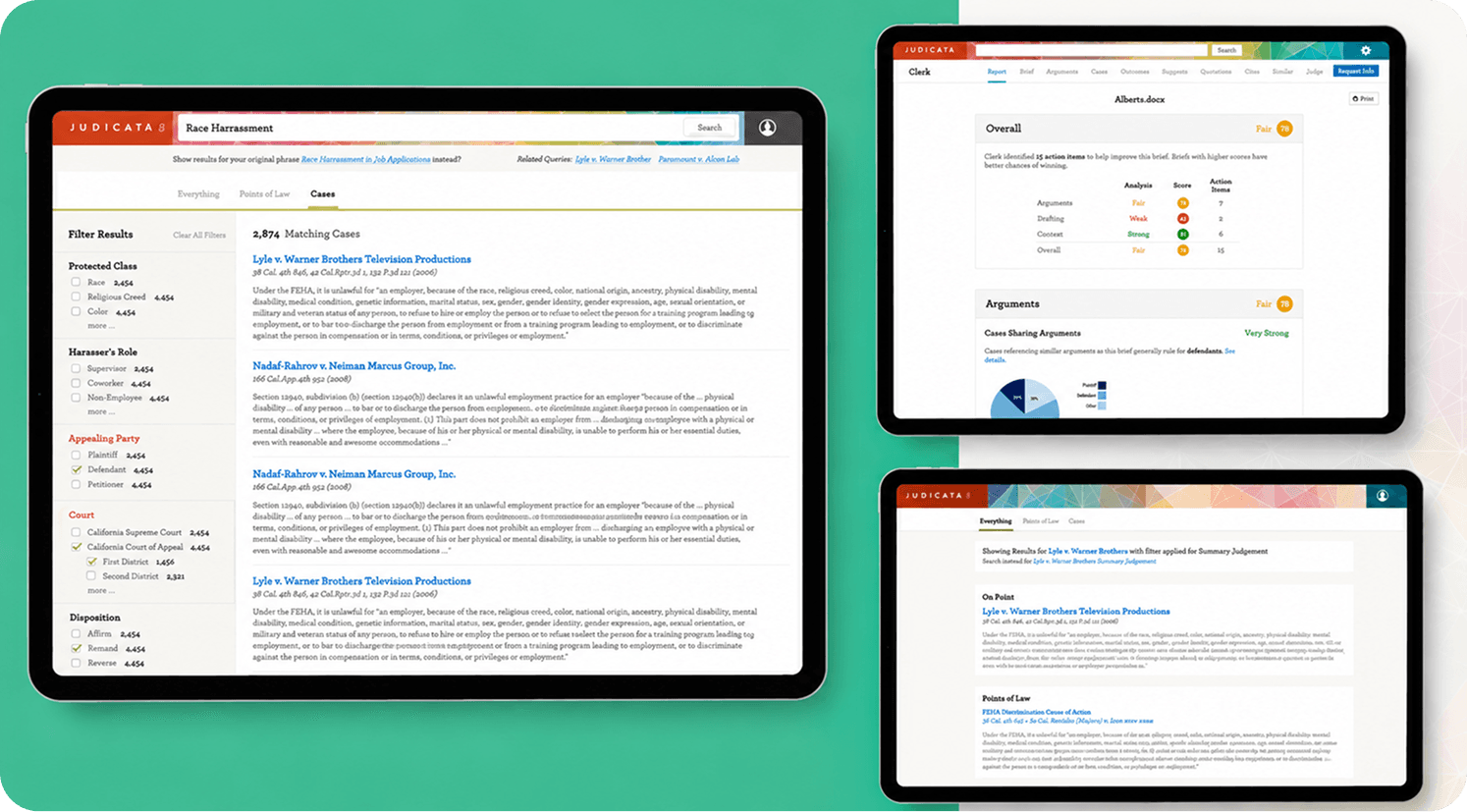
clerk carried the same thinking into legal writing. by analyzing briefs within the wider research experience, the tool helped users examine how their arguments were constructed and identify areas that could be strengthened.
across the platform, information architecture and interaction design kept sophisticated legal analysis readable. the intention was never to remove complexity from the law. it was to make sure the product did not add more of it.
the results reflected that shift. users found relevant case law three times faster, while satisfaction among legal researchers increased by 40%. more than 200 attorneys joined the beta rollout.
the project metrics also recorded a 60% improvement in brief quality through clerk, giving judicata an experience that supported both faster research and stronger legal work.