back to impact
helping hospitals see icu demand before capacity was hit
designing a real-time forecasting experience that helped care teams plan earlier and act with greater confidence.
85%+
accuracy in predicting icu demand
industry
healthcare and life sciences
type
ai-powered critical care platform
mandate
real-time clinical experience design
the platform
at the height of COVID-19, hospitals were making critical resource decisions while patient volumes and care requirements changed by the day.
a venture-backed healthcare technology company was developing an ai platform to forecast icu demand, identify patients at greater risk of deterioration, and help hospitals prepare for upcoming pressure.
clarient helped turn those predictions into a working experience for clinicians and hospital teams.

the urgent brief
the platform had to move from complex predictive models to something teams could understand and use in real time.
clarient worked across workflow design, data visualization, interface design, prototyping, and front-end development. the work happened alongside clinical and ai teams, with decisions made quickly as hospital needs continued to evolve.
our contributions
UX Strategy and Workflow DesignUI DesignInteractive PrototypingFront-End DevelopmentClinical Data VisualizationPredictive Dashboard DesignDesign System DevelopmentAI and Clinical Team Collaboration

the capacity blind spot
hospitals were dealing with two kinds of uncertainty at once.
clinical teams needed to understand which patients were most likely to deteriorate. hospital leaders also needed a reliable view of how that risk could affect icu beds, ventilators, and staffing over the days ahead.
the data existed across multiple systems and changed constantly. the experience had to make those signals easier to interpret without adding another layer of complexity for teams already working under severe pressure.
the design response
traditional research cycles were not possible in the middle of a rapidly changing public health crisis.
we worked directly with clinicians and technical teams, using short design cycles to understand immediate needs, test ideas quickly, and keep the interface focused on the decisions that mattered most.
show what needs attention first
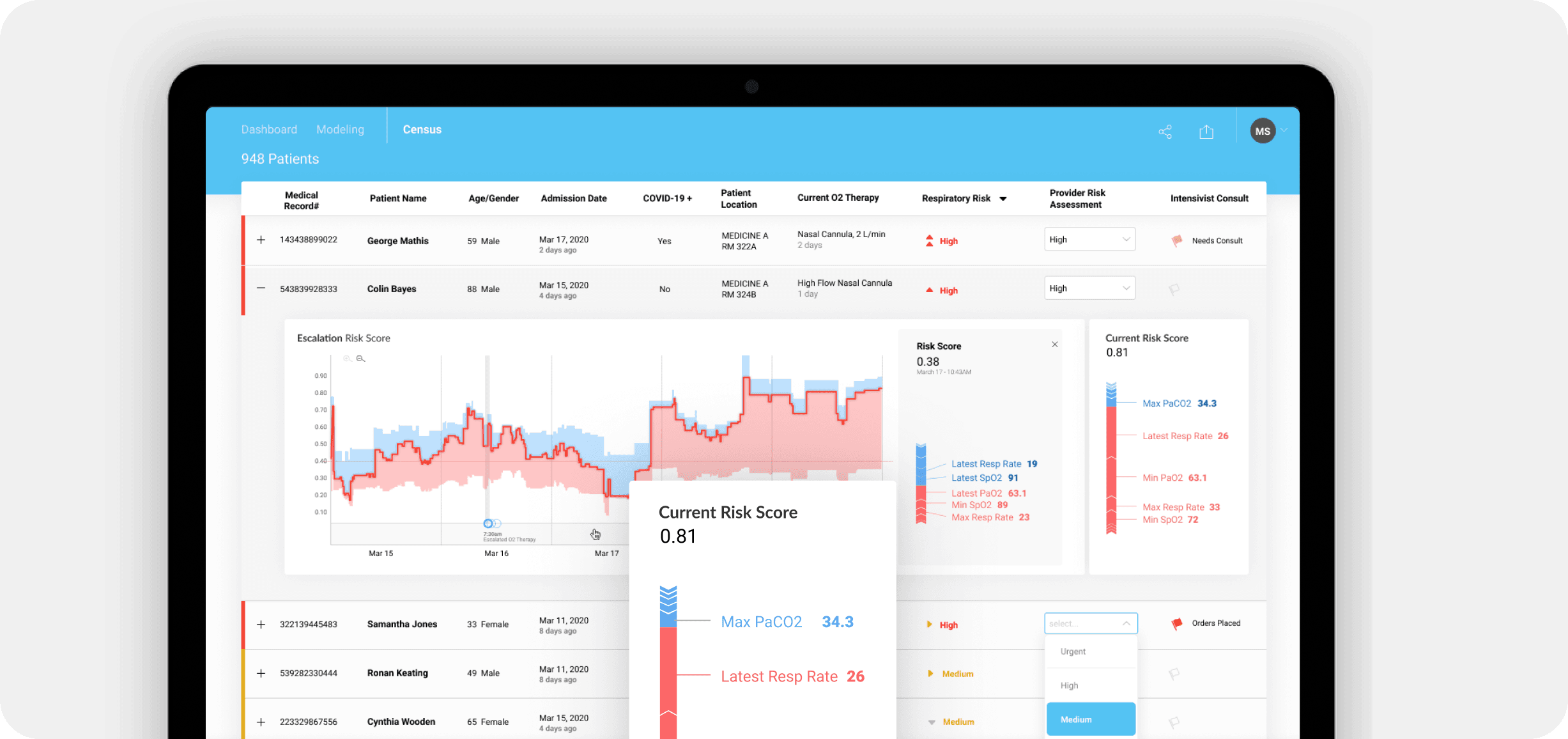
the dashboards brought high-risk patients and changing clinical signals forward.
teams could see where intervention might be needed without searching through large volumes of patient data.
turn forecasts into planning information
predictive models were translated into views that helped hospitals understand likely icu and ventilator demand.
the aim was to make future pressure visible early enough for teams to prepare rather than react.
keep complex data easy to read
vitals, oxygen levels, respiratory rates and risk scores needed to work together without overwhelming the screen.
clear visual hierarchy helped clinicians understand patient status quickly while keeping deeper information within reach.
show what needs attention first
the dashboards brought high-risk patients and changing clinical signals forward.
teams could see where intervention might be needed without searching through large volumes of patient data.
turn forecasts into planning information
predictive models were translated into views that helped hospitals understand likely icu and ventilator demand.
the aim was to make future pressure visible early enough for teams to prepare rather than react.
keep complex data easy to read
vitals, oxygen levels, respiratory rates and risk scores needed to work together without overwhelming the screen.
clear visual hierarchy helped clinicians understand patient status quickly while keeping deeper information within reach.
the impact
clarient helped turn complex clinical predictions into an experience hospitals could use during one of the most demanding periods in modern healthcare.
the platform gave clinical teams a clearer view of patient deterioration risk while helping operational leaders understand what those changes could mean for icu demand.
shared dashboards brought patient information and capacity planning into one working environment. teams could monitor changing risk, see critical vitals, and coordinate decisions from the same source of information.
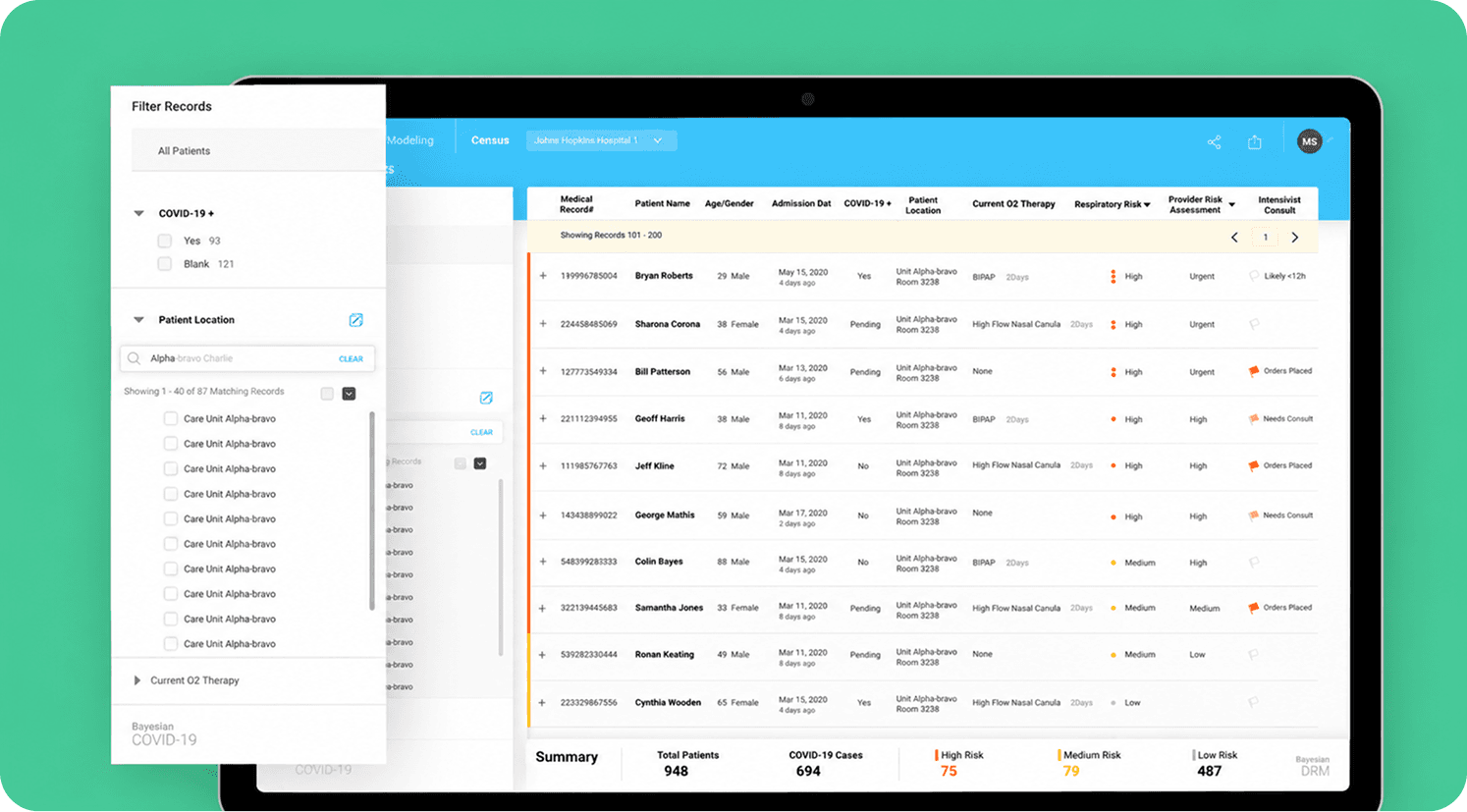
the experience also supported forward planning. hospitals could model likely surges and prepare for icu and ventilator requirements before demand peaked.
because the system worked with real-time clinical data, reliability and readability were treated as part of the same design problem. the interface had to update quickly while still helping users understand what had changed and why it mattered.
according to the project metrics provided, more than 20 hospitals used the platform to predict icu demand with 85%+ accuracy. the platform also enabled 3x faster triage planning for high-risk patients and supported critical care operations across 10+ metropolitan regions during peak covid surges.
the value was straightforward. hospitals gained earlier visibility into demand at a time when even a few hours of additional planning could materially change how resources were deployed.