back to impact
designing a professional photo studio anyone could operate
clarient brought cameras, lighting and software into one guided self-service experience.
40%
reduction in user session time

industry
photography technology
type
self-service imaging platform
mandate
multi-device product experience
the product
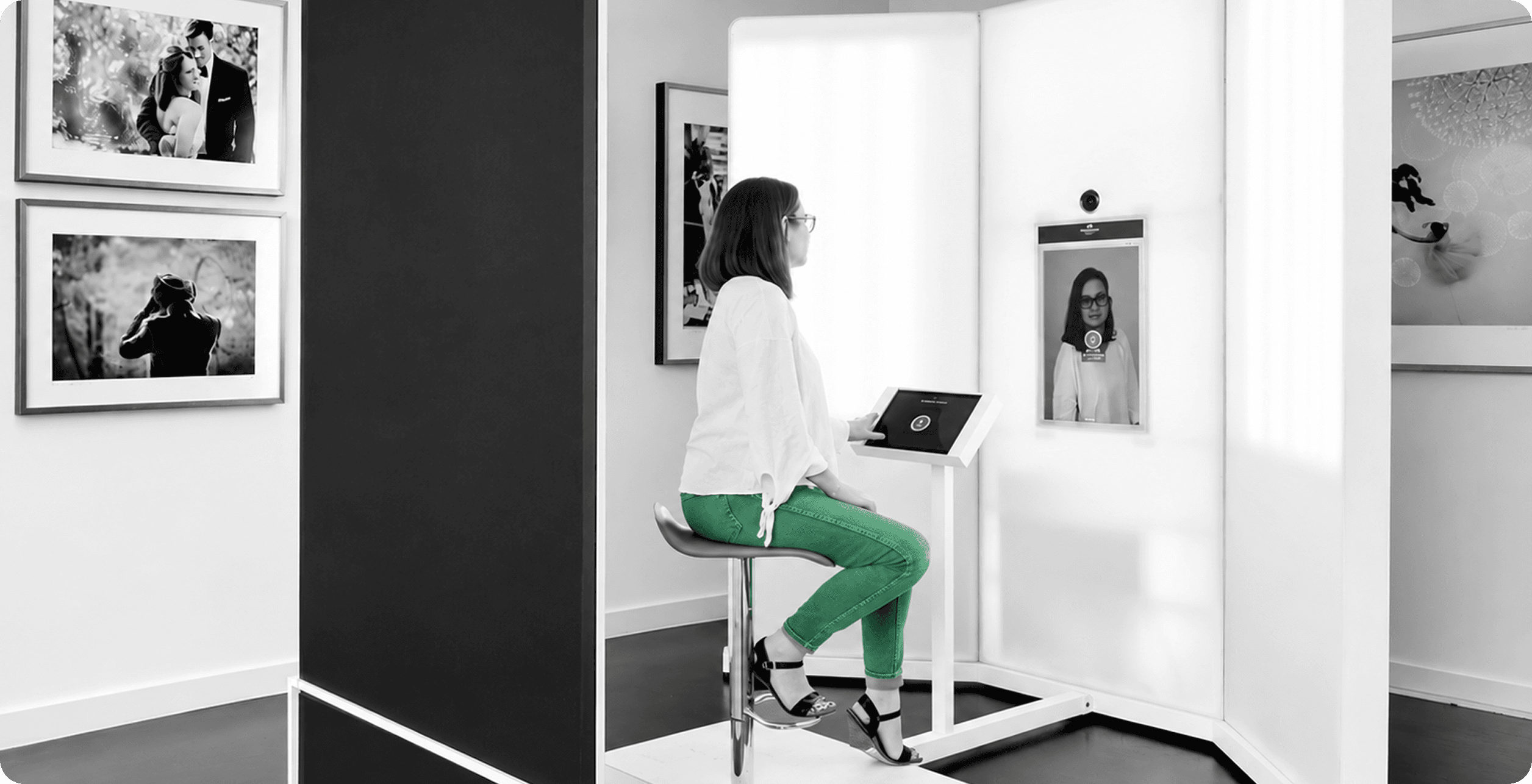
studiopod set out to make professional headshots available without the usual studio setup, photographer scheduling, or manual coordination.
its kiosk combined professional cameras, studio lighting and software in one system, with supporting experiences across tablets, mobile applications and corporate management tools. the challenge was making all of that technology feel almost invisible to the person standing in front of the camera.
the product brief
clarient was brought in to shape the experience across the full product ecosystem.
the work covered the kiosk journey itself as well as the applications and management tools around it. our role was to bring hardware and software into one coherent interaction model, making the experience simple enough for first-time users while giving enterprise teams the control they needed behind the scenes.
our contributions
UX StrategyUI and UX DesignInformation ArchitectureInteraction DesignFront-end DevelopmentKiosk Experience DesignMulti-Device Application DesignCorporate Management Portals



"the team transformed our concept into a scalable, end-to-end solution with precision, innovation, and a commitment that felt like working with our own in-house team. with their expertise, we transformed StudioPod into a seamless, professional solution combining convenience and top-notch quality."

Chris Bailey & Joseph West
Co-Founders - StudioPodthe complexity behind the screen
a professional photo session involves far more than pressing a shutter.
camera controls, lighting, framing, image selection, retouching and delivery all had to work together without asking the user to understand any of them. at the same time, studiopod needed one experience to hold together across kiosks, tablets, mobile devices and the systems used by corporate teams managing deployments at scale.
the real design problem was therefore not how to expose more capability. It was deciding how much of that capability the user should ever have to see.
the design response
guide without over-explaining
the kiosk experience was organized around one clear action at a time.
users were guided through positioning, capture, and selection without being asked to understand the camera or lighting system operating behind the interface.
make every touchpoint feel related
kiosks, tablets, mobile applications and management tools served different purposes, but they needed to feel like parts of the same product.
shared interaction patterns and visual logic kept the experience familiar as users moved between devices.
keep the complexity behind the product
hardware integration shaped the experience, but it did not dictate it.
clarient worked closely with engineering so camera, lighting, and software behavior could happen in the background while the interface remained focused on the user’s immediate task.
guide without over-explaining
the kiosk experience was organized around one clear action at a time.
users were guided through positioning, capture, and selection without being asked to understand the camera or lighting system operating behind the interface.
make every touchpoint feel related
kiosks, tablets, mobile applications and management tools served different purposes, but they needed to feel like parts of the same product.
shared interaction patterns and visual logic kept the experience familiar as users moved between devices.
keep the complexity behind the product
hardware integration shaped the experience, but it did not dictate it.
clarient worked closely with engineering so camera, lighting, and software behavior could happen in the background while the interface remained focused on the user’s immediate task.
the experience
clarient designed studiopod around the idea that professional photography could remain technically sophisticated without feeling too technical for the person using it.
at the kiosk, users were taken through a guided session that made each stage of the process clear. the experience handled the relationship between the interface, camera and studio lighting in the background, allowing the user to concentrate on the photograph rather than the equipment.
that same thinking extended beyond the kiosk. supporting applications gave users access to their images, while dashboards brought editing, retouching and downloads into a more immediate post-session experience.
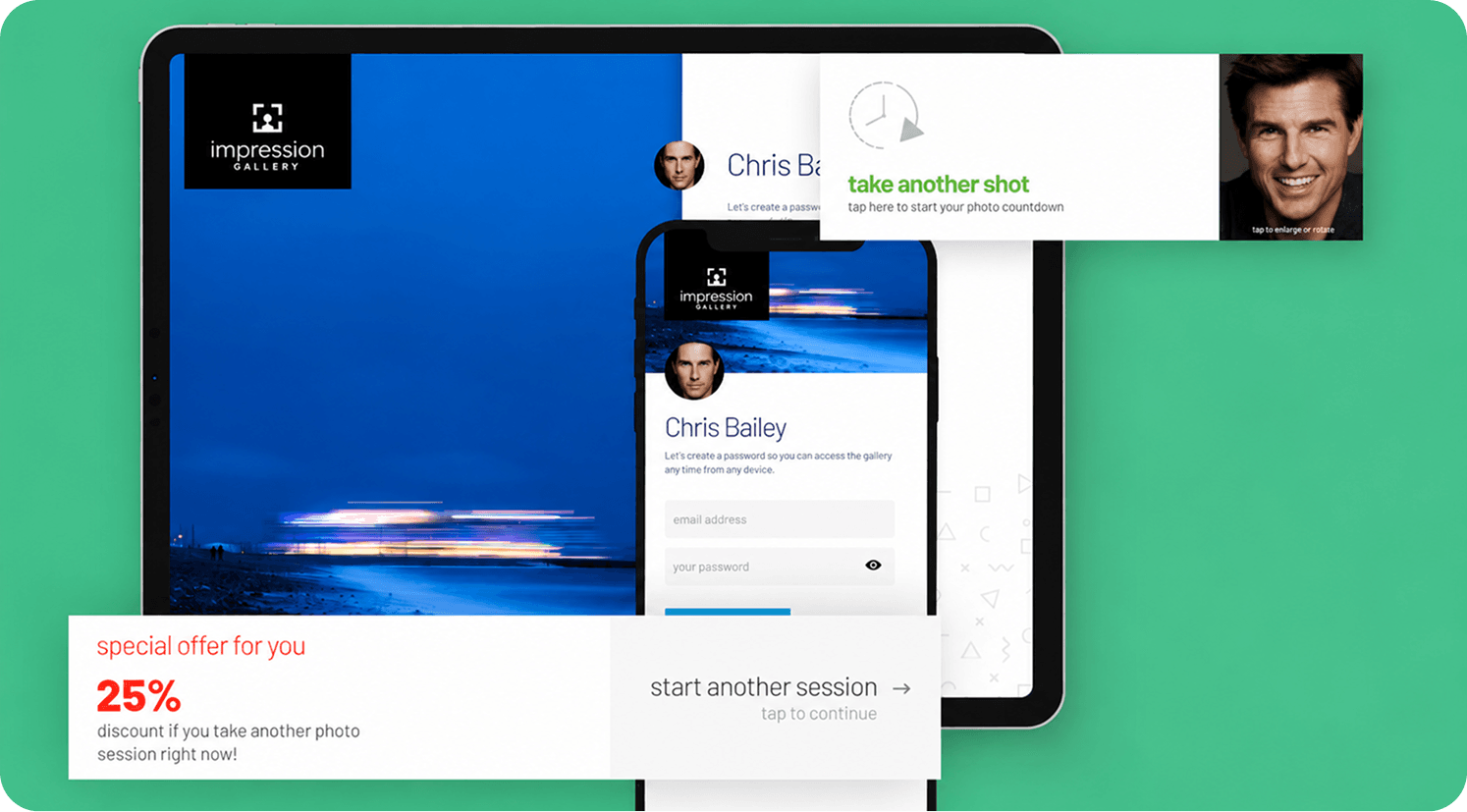
for enterprise customers, the product also needed to work at a different scale. corporate management tools gave teams a central place to manage employee photography and deployments without introducing the administrative burden that often comes with large headshot programs.
the interaction system was designed to remain consistent across each of these environments. that reduced the learning curve for users and gave studiopod a stronger foundation for adding new capabilities without fragmenting the experience.
the results reflected that shift. user session time fell by 40%, repeat usage increased by 30%, and corporate management effort was reduced by 25%. testing also recorded an 85% user satisfaction rate.
the real achievement was the experience underneath those numbers. a product built around professional imaging hardware came to feel simple enough for someone to walk up, use confidently and leave with a result that once required an entirely different kind of setup.